Interesting talk!
Part 1/9
2/9
3/9
4/9
5/9
6/9
7/9
8/9
9/9
3 months ago
Year to year food price changes according to National Inflation Association,
A number of industries could become so much more "genuine", i.e. with some "screening tests".

Let's look at some skills in demand today at Quant Finance Jobs. The employers are mostly hedge funds and the average salary: $200K USD + %PnL (Percentage of Profit/Loss).
"
1) Quant Trading Analyst-Algorithmic Trading Team-London
London, United Kingdom
Interested candidates should have extensive experience in the following;
• Time Series Econometrics
• Alpha Construction
• Bayesian Statistics
• Transaction Cost Modelling
• Black Litterman modelling
• Portfolio optimisation
2) Ultra high frequency Statistical Arbitrage Trader
New York, United States of America
Requirements:-
Candidates will have a background in the high frequency trading space, with experience creating and managing strategies with a high Sharpe Ratio, high ROC and holding little to no overnight positions.
3+ years experience of researching, back testing and deploying systematic trading strategies straddling multiple asset classes including equity index, currency, fixed income and commodities. Futures experience would be ideal.
Ivy League calibre PhD in a hard science
Strong to expert programming skills in C++.
Candidates should be innovative and analytical thinkers with strong communication skills.
3) High Frequency Quant Trader
New York or London, United States of America
Required Skills and experience
PhD from a top tier University in Computer Science, Mathematics, Statistics, Engineering or related subject
Strong hands on programming experience in C++
Experience with analytical packages such as Mathematica, Matlab, PyLab or R
Between 1-3 years experience of developing, implementing and trading high frequency trading strategies across any asset class.
Strong quantitative skills and experience
Passion for solving complex problems and drive to success
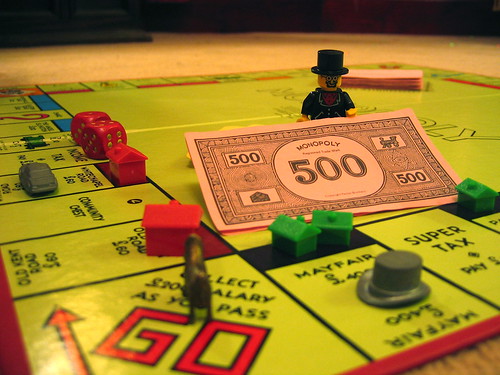
OK so I'm going through Games People Play: Game Theory in Life, Business, and Beyond, and it mentions a game involving hundreds of (allegedly elite) Wall Streeter groups that resulted disastrously. Yeah, I'm talking about the $100 Bill Auction.
Basic rules: Everyone bids for the $100 bill, and the highest bidder pays the bid, and gets the bill. The catch: the 2nd highest bidder must pay the bid, and get nothing.
The average winning bid: $400 (where the top bidder loses $300, and 2nd top bidder $395~)
Attempting to "win", these "titans of Wall Street" ended up taking huge losses. As a corollary, why are these people managing other people's money? Who the heck's managing your KiwiSaver account (New Zealand version of 401k)? The level of incompetence is scary within the industry.