Thursday, April 29, 2010

A need for Screening Tests


A number of industries could become so much more "genuine", i.e. with some "screening tests".


Let's look at the academic level, if Business Schools advocate high probability (60%) of finding executive level employment for graduates, then a screening test could be something along the lines of "OK, then let's do a contract where if the grad doesn't get employed, the school would refund 60% of the tuition...".

Or in the financial industry. The currently popular management + incentive fees are not feasible for the average investor. With the fixed management fee, no management team has any incentive to actually perform for the investor(s), they could simply take opposite directions for half of the investors for 1 time step, then vice versa, and still make a guaranteed management fee income while investors bleed to death.

Screening Test for an investment firm (Mutual funds, hedge funds... etc.)
How about this, having an incentive fee ONLY, and if the fund suffers from a loss, then the management shares that loss with the investors. This little step could immediately filter out the snake oil salesmen, who we all know are rampant in the industry.

Tuesday, April 20, 2010

Quant skills


Let's look at some skills in demand today at Quant Finance Jobs. The employers are mostly hedge funds and the average salary: $200K USD + %PnL (Percentage of Profit/Loss).

"
1) Quant Trading Analyst-Algorithmic Trading Team-London

London, United Kingdom

Interested candidates should have extensive experience in the following;
• Time Series Econometrics
• Alpha Construction
• Bayesian Statistics
• Transaction Cost Modelling
• Black Litterman modelling
• Portfolio optimisation

2) Ultra high frequency Statistical Arbitrage Trader

New York, United States of America

Requirements:-

Candidates will have a background in the high frequency trading space, with experience creating and managing strategies with a high Sharpe Ratio, high ROC and holding little to no overnight positions.
3+ years experience of researching, back testing and deploying systematic trading strategies straddling multiple asset classes including equity index, currency, fixed income and commodities. Futures experience would be ideal.
Ivy League calibre PhD in a hard science

Strong to expert programming skills in C++.
Candidates should be innovative and analytical thinkers with strong communication skills.

3) High Frequency Quant Trader

New York or London, United States of America

Required Skills and experience
PhD from a top tier University in Computer Science, Mathematics, Statistics, Engineering or related subject
Strong hands on programming experience in C++
Experience with analytical packages such as Mathematica, Matlab, PyLab or R
Between 1-3 years experience of developing, implementing and trading high frequency trading strategies across any asset class.
Strong quantitative skills and experience
Passion for solving complex problems and drive to success

"
We can see that strong mathematics is a must, and computer science a close 2nd, or an ivy league PhD in a "Hard Science" (I'm thinking physics, statistics). So knowing what the hedge funds possess and utilize, how does the average private trader compete and survive, profitably?

Just some ideas
  • Invest time and energy to gain necessary skills to level the playing field
  • Find ways to quantify institutional buying/selling pressure (but risk being always a bit behind)
  • Raise enough money to influence and exploit the markets like Soros or Buffet
  • Hire a quant...

Sunday, November 1, 2009

ARMA(p,q) forecasting


ARMA, or Autoregressive Moving Average, offers a relatively simple time series forecasting model. So what about non-stationary financial time series without much autocorrelation, would it perform well?


ARMA(p,q) basics

“

Forecasting model or process in which both autoregression analysis and moving average methods are applied to a well-behaved time series data. ARMA assumes that the time series is stationary-fluctuates more or less uniformly around a time-invariant mean. Non-stationary series need to be differenced one or more times to achieve stationarity. ARMA models are considered inappropriate for impact analysis or for data that incorporates random 'shocks.' See also autoregressive integrated moving average (ARIMA) model.

“

Source: Business Dictionary


“


Autoregressive Model, AR(p)

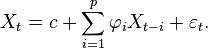
where are the parameters of the model, c is a constant and e is white noise. The constant term is omitted by many authors for simplicity.


Moving Average Model, MA(q)

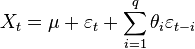
where the θ1, ..., θq are the parameters of the model, μ is the expectation of Xt (often assumed to equal 0), and the e, e,... are again, white noise error terms.

“

Source: Wikipedia


Some thoughts off empirical findings


As ARMA was created to address stationary processes, ARMA forecasting resulted much more reliably with percentage returns (of equal length time steps) instead of raw financial time series. Practical application for trading strategies could surface with more analysis of conditional error distributions. Reliability however remains an issue until conditional volatility management. Over all, this simple method presents some promising capabilities!

Sunday, September 27, 2009

More bank loan losses coming


US bank large-loan (>$20Million) losses have reached $53Billion USD in 2009, according to Yahoo Finance AP.


"
The report said total identified losses of $53.3 billion in 2009 surpassed last year's total of $2.6 billion, and nearly tripled the previous peak in 2002, when losses totaled $19.1 billion...


While the economic downturn was first pegged to residential mortgage loans, banks and lenders are now having problems with commercial real estate...
"


So... what about the derivatives like CDOs and CDSs riding on these loans? If a paltry $2.6Billion loss wrecked such havoc in 08, what the heck will $53Billion unleash, eternal damnation?!


Keep in mind the S&P500 remains quite over valued, PE ratio at Aug 31st 09: 129.19


Monday, September 21, 2009

Prime credit score= 50% more likely to default


Conventional thought concludes that folks with good credit score will likely struggle to keep making payments, and then reality hits creditors with "strategic defaults". It makes sense, those with adequate understanding of finance and discipline would find it desirable to transfer losses to lenders while sacrificing "credit".


The LA Times agrees with the below,

"
Research using a massive sample of 24 million individual credit files has found that homeowners with high scores when they apply for a loan are 50% more likely to "strategically default" -- abruptly and intentionally pull the plug and abandon the mortgage -- compared with lower-scoring borrowers.

* Homeowners with large mortgage balances generally are more likely to pull the plug than those with lower balances. Similarly, people with credit ratings in the two highest categories measured by VantageScore -- a joint scoring venture created by Experian and the two other national credit bureaus, Equifax and TransUnion -- are far more likely to default strategically than people in lower score categories.


* People who default strategically and lose their houses appear to understand the consequences of what they're doing. Piyush Tantia, an Oliver Wyman partner and a principal researcher on the study, said strategic defaulters 'are clearly sophisticated,' based on the patterns of selective payments observable in their credit files. For example, they tend not to default on home equity lines of credit until after they bail out on their main mortgages, sometimes to draw down more cash on the equity line.
"

Saturday, September 5, 2009

Innovation investments hold more risk


According to Warren Buffet (The Snowball), while technological novelty has advanced mankind in general, its investments usually end badly. He mentioned some empirical evidence of this at a private talk, from cars to airplanes.


Cars and planes

They are no doubt a couple of seriously significant inventions from the last century. Around 2,000 car companies existed at one time, and out of those, only a handful (Ford and sort of GM?) stands today. The rest have pretty much all gone belly up, taking shareholders down (enriching short sellers).

No single air travel business has generated greater-than-actual-rate-of-inflation returns for its investors, notably the ones who have gone bankrupt. Given that business schools, parents, and TV preach creativity, industrial revolutions and stuff, naturally the question comes, “what gives?”


Good ideas still have limits

Management conflict of interest, miscommunications, competition, idealistic albeit inadequate budgeting, are but some profit making hurdles an innovative product/service idea itself can not overcome. Another point from Buffet, as these “new technology” firms push for esoteric products/services, the complexity in estimating their actual, intrinsic value does nothing but increase UNCERTAINTY.


The negative correlation between VIX and major stock indexes advocates that uncertainty leads to price drops. It is pretty clear cut, and again mainstream belief took the wrong side.

Friday, August 14, 2009

S&P Stats 7/31/09 (PE at 143.95)

This is from the StandardAndPoors.com

Things look pretty shaky from here.

S&P 500 Exchange Representation
As of July 31, 2009

Number of Cos. % of Market Capitalization
NYSE 411 80.7 %
NASDAQ 89 19.3 %
AMEX 0 0.0 %


S&P 500 Statistics
As of July 31, 2009

Total Market Value ($ Billion) 8,660
Mean Market Value ($ Million) 17,319
Median Market Value ($ Million) 7,096
Weighted Ave. Market Value ($ Million) 71,956
Largest Cos. Market Value ($ Million) 343,483
Smallest Cos. Market Value ($ Million) 712
Median Share Price ($) 30.050
P/E Ratio* 143.95
Indicated Dividend Yield (%) 2.18
NM - Not Meaningful *Based on As Reported Earnings.

Sunday, April 13, 2008

Enhance Stock Investment Return via Option Selling


Long term investors could produce increased return (or lessen the same amount in losses) from selling call options. The concept of derivative trading may intimidating some learning investors, just read on and I will show you why this works and carries very-low risk.

Call-Option Basics

A Call-option gives you the right, not obligation, to purchase the underlying stock at the strike price; a Put-option does the opposite but right now we only take interest in Calls. Each option contract (according to CBOE regulation) carries 100 shares of the underlying stocks.

So, trading 1 contract of IBM Call-option gives you the right to purchase 100 shares of IBM at the strike price before the option contract expires (usually 3rd Friday of expiration month). The value of traded option contracts is termed the “premium”, the price that option buyers pay, and option writers receive.

(The most renowned option exchange today operates at CBOE, Chicago Board of Option Exchange. They provide a brief and concise primer on options. Spend half an hour on it and you will understand all the fundamentals.)

Out-of-money Call-Options

The option “money-ness” describes the relationship between the strike price and underlying value. For Call-Options, this means a strike-price higher than the underlying price, e.g. holding an IBM call-option contract with strike at $110 while IBM sells at $105/share. The premium decreases to zero for out-of-money options at expiration.

Writing Out-Of-Money Call-Options

When you write a contract of Calls, you become obligated to sell 100 shares of the underlying stock at strike price IF assigned (this happens randomly, and infrequently according to statistics). This naturally requires tremendous risk management if you do not own shares of the underlying. However if you do hold sufficient underlying stock positions (i.e. covered), this tactic could prove very worthwhile.

Detailed Example

Let’s say you own 100 shares of QQQQ (closed at $44.28 on 4/11/08). You could consider selling a contract of Calls with strike price ≥$45 expiring in May. Last quoted Bid for a $45 Call stands at $1.16, and you decide to write 1 contract.

The following possibilities will ensue for the 3rd Friday of May.

1. QQQQ lowers in value to say, $41/share, and you lose $328 on the ETF position and the options expire worthless. Due to premium gained on the written Calls; you reduce that loss by $116.

2. QQQQ remains at the same price of $44.28, and you made no return on the stock position, and the options expire worthless. With the premium earned, you make a risk-free profit of $116, roughly 2.6% of the underlying position.

3. QQQQ increases to say, $48/share, and you gain $372 on the ETF position, lose $300 on the written option position (IF assigned), and end with a net profit of $72. Yes in this case your profit could become lower; nevertheless it is still about “taking profit”, not a loss.

So, this scheme reduces risks and increases your probability of success (2 out of 3 net-profitable potential scenarios), and you can pull it off easily. Pretty good, huh!

Sunday, March 23, 2008

Effect of Hedge Funds Today


As the hedge fund industry continues to grow, the markets have turned increasingly volatile today. This logically hurts the less-informed retail investors as it forces more price instability related risks onto their positions even in bullish periods.

Growth of Hedge Funds

Presently, the hedge fund industry exceeds $1 trillion, and still expanding as money managers attempt to squeeze every drop from the apparently saturated market. The investment vehicles utilized range from equity, commodities, debt instruments, to derivatives of all forms. Some make directional or market neutral bets while others attempt arbitrage. Nevertheless, the relative large sums create significant price impacts with each order.

Increased Risks for Public Investors

Prices move as a result of relatively large initiated orders, and the hedge fund industry does just that. This evermore evident phenomenon hurts the uninformed investors as it leaves them literally “buying at tops and selling at bottoms”, due to a lack or delay of information.

Wall Street rumors and news releases tend to reach fund managers first, where the public usually stands last in line. This creates unfounded risks in present industry condition as the price affecting hedge funds have first dibs on most relevant information, and they usually take action before the mainstream crowd to preserve or amplify returns.

Volatility from Hedge Fund Sentiment

With so much more capital influenced today, vague rumors or corporate press releases all potentially trigger backbreaking ripples across these secretive investment pools. Collective fund management sentiment has created unprecedented power in the industry, as seen in the present liquidity issues faced by “prime” mortgage backed investment vehicles.

Back in 1998, a quasi-recession resulted from the fall of Long Term Capital Management, a hedge fund run by two Nobel Prize winners. Their failure, a loss of “only” $4.6 billion, had caused such market turmoil that many individual investors had lost fortunes, some everything.

When ratings agencies downgraded General Motors debt to junk bond status in May of 2005, the shock throughout the hedge fund industry caused a steep correction in the major indexes. Only after awareness of GM solvency, along with heavy buying from the public, did this near-catastrophe go unnoticed.

Solutions for Individual Investors

Without an edge, statistical or information regarded, the uneducated investors face sharp negative expectancies in the present financial environment. The solution requires a bit more work than ever before, like any other business. Do the researches, study how the hedge funds and Wall Street institutions function, learn the math, become informed. When it comes down to it, follow the money and you will not mind the work.

Wednesday, March 19, 2008

Realistic Risks of Long Term Stock Investments


Long investment positions of corporate common stocks carry inherent risks. Advisers, agents like to avoid this subject as it requires more profound considerations via the client investor, and understanding it would reveal the often unjustified entry-costs and management fees.


Risk of General Market Downturn

The stock markets have a positive correlation to general economic swings, and wield at least a couple of bearish years each decade. This leaves the probability of stock markets ending each year at higher levels of 70-80% at best. The industry analysts, advisers or brokers facilitate public ignorance of this easily in bullish periods, where any stock seems to rally effortlessly with the illusion that no forms of risk exist.


Realistically, just the opposite is true. The longer a certain stock has rallied continuously, the more likely institutional holders look to take profit (i.e. sell) before the bearish period commences, or perhaps they know something that the public does not. Of course they need chumps to provide liquidity and buy off them, the role usually played by the general public; this is where the financial advisers and brokers do their magic and sell the “risk-free” sentiment, where “Of course it’ll go up!”


Risk of General Volatility Even In Bullish Periods

Prices do not move in nice smoothed curves, but rather ugly zigzags as result of constant quasi-auction based trading on the exchange floors. Even in a bull market, the general fluctuations occur and the simple attitude of ignoring this risk and “focus on the far horizon” typically ends in mediocre or terrible performance.


Accurate assessment of potential loss due to volatility could require a lot of number crunching, but simple methods exist as well. The ATR, or Average True Range, for the historical annual price ranges provides a rough estimate. Most of the free web based price charting services provide this one of many available volatility indicators.


Risk of Corporate Bankruptcy

Stocks from Enron or WorldCom had performed well in the bull market of the 90’s, and their demise never appeared obvious until the selling began. This risk always exists in long term long side stock investments, and it increases with length of holding period.


In other words, longer held stock positions carry higher risk of losing close to 100% of the associated value according to historical statistics. Longer held short positions face higher risk of getting squeezed short, i.e. the original lender of the shares demand them back, but even that has a lower loss potential than the upside bets.


Consistent Investment Profit Takes Work

Solutions exist to mitigate or limit the above mentioned risks. Taking short positions, applying market-neutral strategies, arbitrage schemes are some of the many options available to the retail investors. Investment managers who does not acknowledge or disclose these issues imply incompetence or dishonesty, and probably do not deserve the hefty fees.


It takes dedicated self-education, then planning and flawless execution to win in this game. Like many other good things in life, complex, but not impossible. I will discuss some of these solutions in a future article.

Sunday, March 9, 2008

Diversification Doesn't Lower Risk

“You want to reduce your portfolio risk. Diversify, diversify, diversify…” I remember hearing some stock broker ranting on TV a decade ago, as the bear market hit US in 98 along with the collapse of Long Term Capital Investments. The audience at the studio watched her intently, the pain of recent losses still apparent on their faces. They all wanted desperately a way out of the hole, and turned to this supposedly professional for advice. She kept going with the metaphors of eggs and baskets, how risk is bad... Just exactly how and why, she did not bother mentioning.

Hedging Via Diversification Limits Returns

The concept never made sense to me even before any exposure to the financial markets. You buy a stock, then you buy some more because you hope they will move against each other, does that not simply lead to low potential returns, if any, and high commission costs?

ETF’s and Hedge Funds Increase Correlations

With the advent of Exchange Traded Funds and the explosion of hedge funds throughout the world, correlations between stocks, bonds and commodities have become much higher than the days of Markowitz (founder of modern portfolio theory). Most of the cause points to speed of information between newly developed funds making similar price impacting transactions concurrently. The markets have changed.

While the investment fund industry grows, fund managers of similar sentiment tend to take action concurrently. This leads to unprecedented high levels of correlation between individual stocks, hence resulting in more volatile markets. In present industry conditions, and evident from recent turmoil, the volatility added risk has become effective regardless of diversification.

ING as an Example

ING, a fund management business based in Australia, likes their investment advisors boast “safety” of their holdings due to diversification. Look up ING fund unit prices, every single one has declined since the sell off of last July; some have taken draw downs up to 70%. So much for the magic of “diversification” huh?

Last Words

Does it even matter why or how this phenomenon has occurred? It simply happens, and knowing it alone could help you become a more informed investor or trader. The world changes, so does industries, and it takes work to adapt and stay profitable.

The market exists for the purpose of asset accumulation or reduction. With every transaction you make, the goal should remain to enlarge account size; anything else serves no purpose but noise. Read a few books and learn what risk management actually entails; it will make everything easier.

Thursday, March 6, 2008

Birthday Paradox And Risk Evaluation


Take any random pair of people and the probability of them having the exact same birthday sits at (1/365)≈0.0027 or roughly 0.27%. The chance of it seems so low that many would ignore and assume it never occurring.

The Birthday Paradox however makes available mathematical means to display that the “improbable” occurs quite more often than general belief. How many people does it take to have over 50% chance of a pair sharing the same birthday?

23

Explanation, please keep in mind this example ignores leap years.

1) With 23 people 253 possible pairs exist.

23*22/2=253

(Look up Permutations if you don’t understand this)

2) Now instead of finding the chance of two people having the same birthday, let us find the probability of them having DIFFERENT birthdays.

1-1/365≈0.9973 or 99.73% or 364/365 in fraction

3) Plugging in the number of possible pairs.

(364/365)^253≈0.4995 or 49.95% chance of having every possible pair within the group to have DIFFERENT birthdays.

4) Therefore, this concludes that out of a group of 23 people, there exists 50.05% probability of having a pair born on the same date.

As shown, it takes only 23 unique people or events for something formally considered “highly unlikely” to transpire. This suggests that business operators could adopt a more meticulous and mathematical approach to risk management.

Killer storms or typhoons come on the ocean infrequently. Yet, shipbuilders make certain to construct and design the vessels to endure the worst of conditions. When it comes down to life or death, survival relies on weathering the rare catastrophes.

Does your business model include contingency plans for short term negative outcomes or if competitors employ unforeseen strategies? The investors of bankrupt New Zealand financing companies had to learn this the hard way, with some losing a lifetime of savings. I often hear the phrase “take calculated risks”, yet not many people understand the calculation part. It certainly does not equate to guessing and hoping for the best.

I plan to discuss risk management in the near future. In the mean time, free resources are available everywhere at the library or over the internet. Learn to survive the worst of times, and everything will turn out A O K.

Friday, February 29, 2008

Stock Market Downside Bets


As mentioned in “Prisoner’s Dilemma” I posted a while ago, most efficient teamwork requires absolute faith and discipline from every player. Conflict between individual and collective payoff exists in continuous time. On top of all this, majority of people do not act rationally. It then makes sense that most business type games do not operate in the most efficient manner where maximum potential payoff could occur. The next logical suggestion sets forth that the average multi-staff business has a higher probability toward failure than success.

OK, the question lies in how we can exploit this for profit. Most simply, downside bets on the stock markets. Allow me to illustrate why and how it is done.

An economist visited AUT early 2007 and lectured regarding corporate crisis management. He mentioned that 1 out of 3 corporations experience a crisis every 5 years that it will never recover from. Sounds pretty serious. Enron, WorldCom, AMD, CROX and the New Zealand finance companies come to mind.

David Birch, former head of a business data mining firm, proposed the following Survival Rate of new businesses.

• First year: 85%
• Second: 70%
• Third: 62%
• Fourth: 55%
• Fifth: 50%
• Sixth: 47%
• Seventh: 44%
• Eighth: 41%
• Ninth: 38%
• Tenth: 35%

The numbers show that the conventional “90% failure rate” stands completely unfounded. Despite that, new businesses in general have the odds against them after five years of operations. According to this data, 1 in 2 businesses face failure after first 5 years of operation. This also concurs generally with the “business cycle” theory of economics majors.

Keep in mind if the business goes completely under, your investment on the downside bet would profit close to 100%. E.g. in the last couple of bullish years, a downside bet on the NZ financing companies would have taken losses of 10%-15% each year; and as the funds became fudged, the downside bet would have made well over 50-90%, hence a positive expectancy.

What moves the prices of stocks? The gist of it lies in supply and demand on the exchanges. When volume in initiated buy orders overwhelms sell orders, price moves up, and vice versa. Rational long term investors or short term traders may put in large buy orders making price climb, but sooner or later they will want to take profit, or cut losses. All the while, there is absolutely no guarantee whether the seller would repurchase the stocks.

In other words, there is certainty that stock holders will eventually initiate sell orders creating price drops, yet there is not of anyone recommitting in buying shares of the same stock needed for a rally. This observation alone puts the downside bets at better odds than upside.

Behaviorally speaking, even the professional fund managers “panic” when it comes to low grade holdings. As soon as they realize how worthless anything has become, they would want to dump as much of it as possible while trying to preserve capital. Of course the potential buyers would demand substantial discounts for taking on further risks. This phenomenon explains partially why asset values tend to decline at higher velocity than growth. Another advantage toward the downside bets.

Two simple approaches exist to accomplish this for individual stocks.

  1. short-selling positions
  2. Put options

I will not get into details of what they mean. Look them up, a sea of information on them exist on the internet.

Research becomes easy when you look for a hopeless business. With the past corporate accounting shenanigans, we all know companies like to fudge their financial statements to appear profitable with promise of further growth. However, they do not have as much incentive to present misleading negative information as demand for their stocks is needed in order to finance business operations.

With that, if the financial statements look great, it still remains questionable; yet if the numbers seem awful, they are probably true. I would suggest the following to precede downside bias for a listed company.

· Low total cash holding vs. Market Cap

· High P/E ratio

· High Debt/Equity ratio

· Low Short Interest

Low cash means the company will not likely able to afford any repurchase of their own stocks, drying up supply. A high P/E ratio would give institutional traders a sentiment of “over-valued”, and consider selling to take profit. A high debt/equity ratio displays how financially disconcerting the company has become. Lastly, the earlier you get in on the short action, the more you will likely make in profit. You do not want to come “late to the party”.

Of course a wealth of additional information could provide a trader with higher winning rate. The above would give anyone a definite edge compared to some newbie “investor” who buys and holds hoping for some Warren Buffet pipedream.

Jesse Livermore, a great stock trader, made several hundred million dollars in 1929 shorting the railroad stocks. Goldman Sachs made several billion dollars last year making downside bets on mortgage backed credit derivatives. When the fudge comes, it becomes a game of hot potato. The buy and holders face blowing up, while the downside bets rake in profits. Which side will you take?


As Featured On Ezine Articles